
Reloading From BlockSync
When a new version of the BlockSync model is available, an out-of-date indicator will appear at the top of the project tree and next to the out-of-date objects:
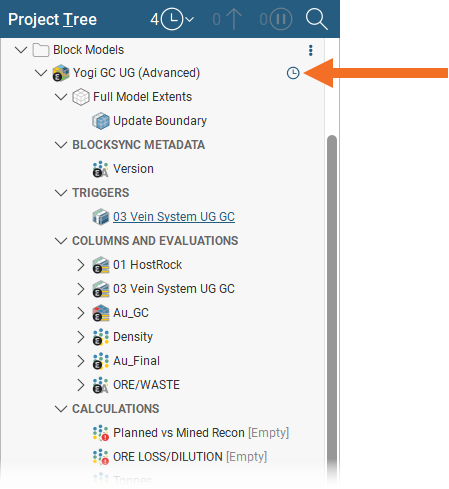
You are not limited to reloading newer versions of the BlockSync model; reloading older versions can be useful when, for example, viewing the state of the model at different points in time.
This topic describes how to reload a local copy of a BlockSync model. It is divided into:
- Starting the Reload Process
- Setting Spatial Extents and Choosing Columns
- Visualising Differences in Versions
The Understanding Subsets and Update Boundaries topic provides detailed information on working with block model subsets.
Starting the Reload Process
To update to a different version of the BlockSync model, right-click on the local copy and select Reload from Seequent Evo. A window showing the available versions will appear and you can choose the version you wish to reload
In this example, the currently loaded version is version 2. Selecting version 5 displays the column changes between the version currently in the project and the selected version:
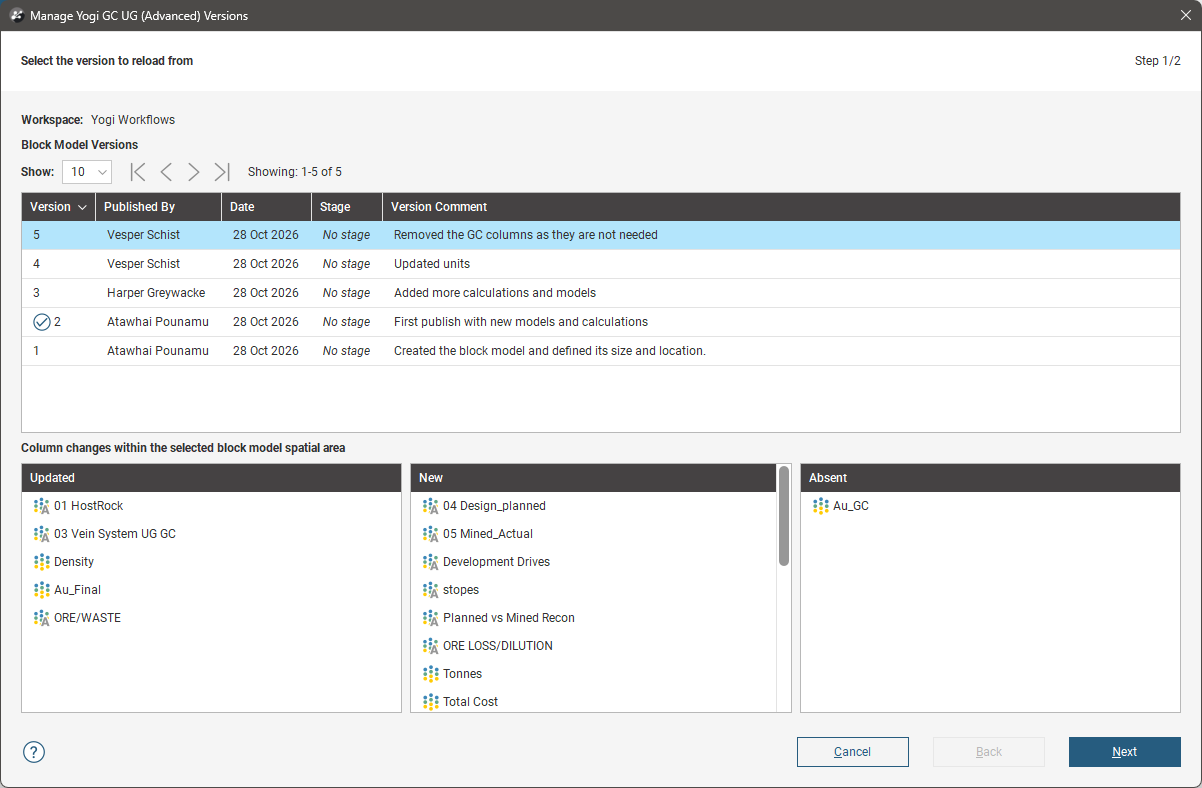
Whether columns in the BlockSync model and the local copy are regarded as changed depends both on the values in the columns and the metadata.
- The Updated columns exist in both the local copy and in the selected version of the BlockSync model and have changed.
- The New columns exist in the selected version of the BlockSync model but are not present in the local copy.
- The Absent columns do not exist in the selected version of the BlockSync model, but are present in the local copy. When you reload, these absent columns will be removed from your local copy.
Once you have decided which version you wish to reload, click Next to select the spatial extents and the columns to reload.
Setting Spatial Extents and Choosing Columns
The last part of reloading from BlockSync model is similar to importing a BlockSync model for the first time: Setting the spatial extents and choosing columns.
The spatial extents options are:
- Full Model Extents. This reloads all blocks stored in BlockSync.
- Extents of the Selected Version Update. This reloads only the blocks updated in the version you have selected. It will be greyed out if the version is the full model extents.
- Spatial Subset: Volumes. This reloads only the blocks that are bounded by the volume defined by the objects selected. There are two options for filtering blocks that lie along the subset’s boundary that are explained in the Understanding Subsets and Update Boundaries topic.
- Spatial Subset: Bounding Box reloads a subset of blocks defined by a bounding box you define. You can use the handles in the scene to set the subset’s extents or you can use the Enclose Objects list to set the extents based on objects in the project.
The Columns list shows all columns available in the selected version of the BlockSync model. Choose the columns you will be updating and any that are needed for context.
Click Reload to update the local copy with the selected version of the BlockSync model.
Once the local copy has been reloaded, it is a good idea to set the update boundary to limit processing.
Visualising Differences in Versions
If you have imported the BlockSync version number column, you can display it in the scene to get an idea of where the block model has changed across versions. Do this by either dragging the Version column into the scene or, if the block model is already displayed, choosing it in the shape list:
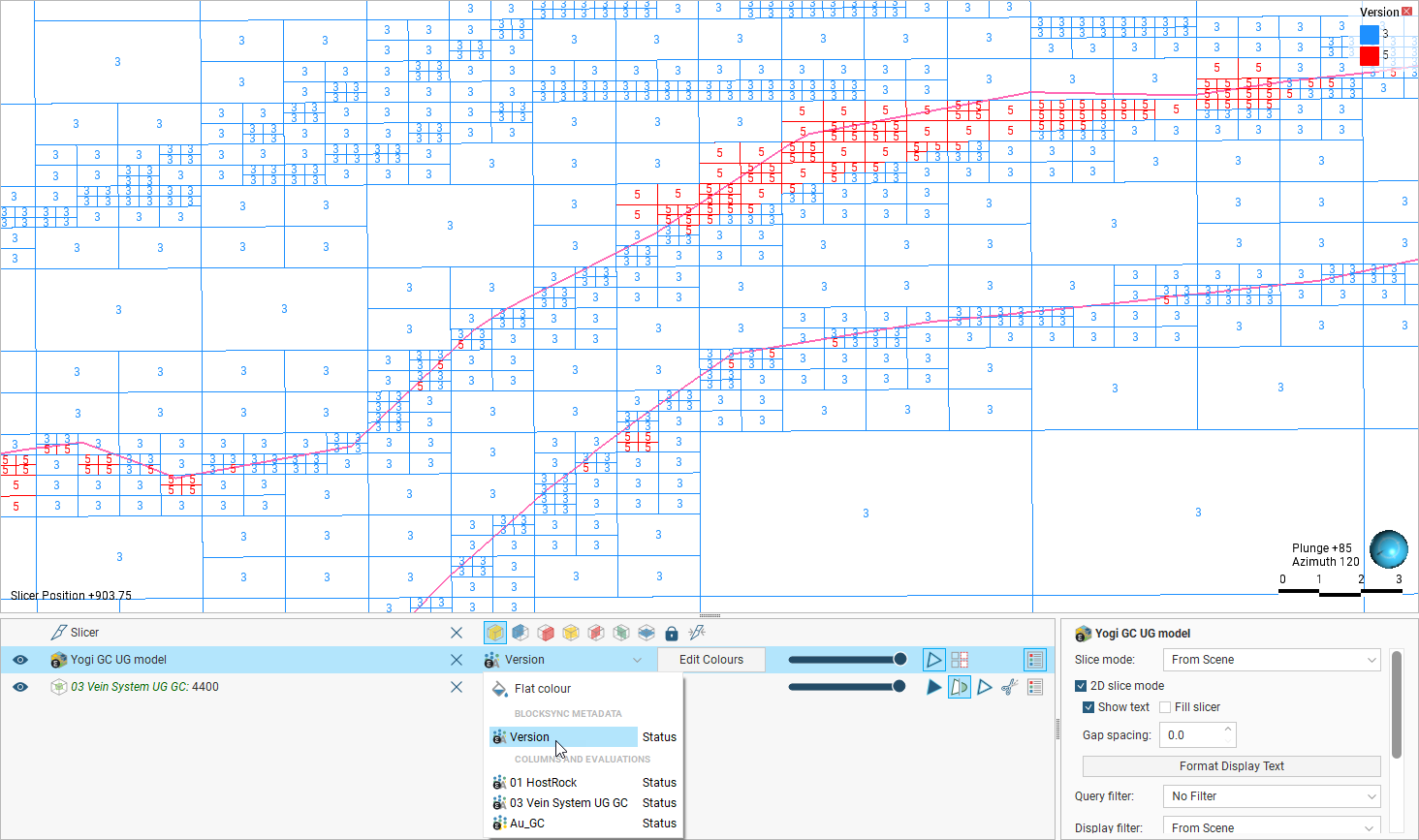
Here we have zoomed in to part of the model where there have been changes. The model is displayed sliced, in 2D slice mode with Show text enabled so we can see the version numbers in the scene.