
Combining Points Tables
When you have points data from various sources stored in different tables, it can be useful to combine them into a single table for use in downstream workflows.
Combined points tables can be created from various points data tables in the project, including:
- Points tables with numeric data columns in the Points folder
- Interval midpoints in the Points folder
- Grids of points, where there is a suitable calculated column available
- Downhole points, including LAS points and downhole points in a combined drilling dataset
Combined points tables can combine various data types from source tables:
- Numeric data
- Category data
- Date/timestamp data
- Hex colour data
- Freeform text data including comments and URLs
The rest of this topic describes the steps involved in building a combined points table. It is divided into:
- Rules Applied When Combining Points Tables
- Creating a Combined Points Table
- Changing Table Priority
- Editing a Combined Points Table
Options for exporting a combined points table are the same as those for other points tables. See Exporting Points Data in the Points Data topic.
Rules Applied When Combining Points Tables
Data from the source tables is used in a combined points tables as follows:
- When the same data appears in more than one source table, all instances of the data are included in the combined points table, but the rows from lower priority tables are marked as ignored in the combined table.
- Where data in a source table is marked as ignored, it is included in the combined table marked as ignored.
- If a row in the source table is in error, that row will be included in the combined table but it will be marked as having an error (
 ). The error can only be corrected in the source table.
 - When special value handling rules have been applied to the data in the source table, the results of the rule being applied will be used in the combined table.
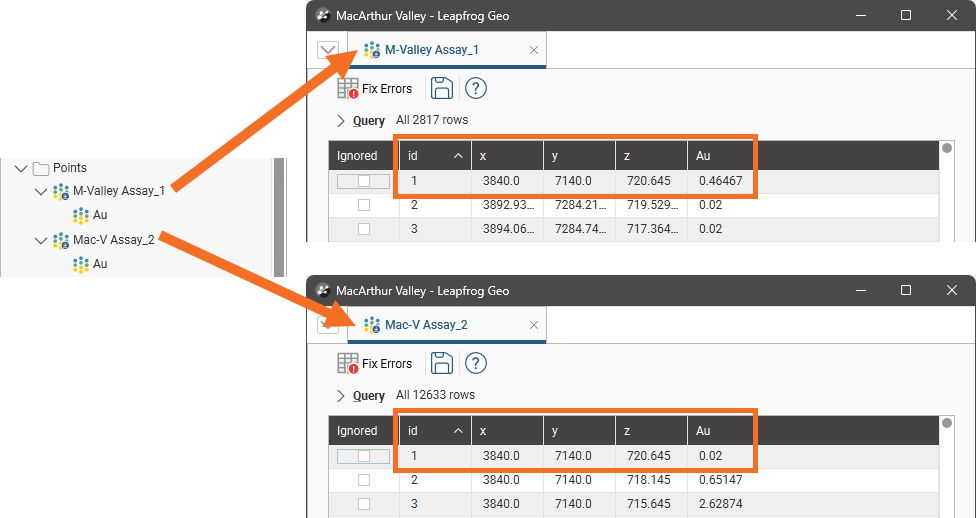
This example shows how the data from two points tables is used in a combined points table. The XYZ coordinates for both assays are the same for row id 1, but have different Au assay values.
The information from each source table is used to build the combined points table, with data rows in lower priority tables marked as ignored when conflicted. For example, the two rows shown here in the combined points table MV_Combined_Assay have the same XYZ coordinates. The row with the Au value of 0.464672 is from the table M-Valley Assay_1, whereas the row with the Au value of 0.02 is from the table Mac-V Assay_2:
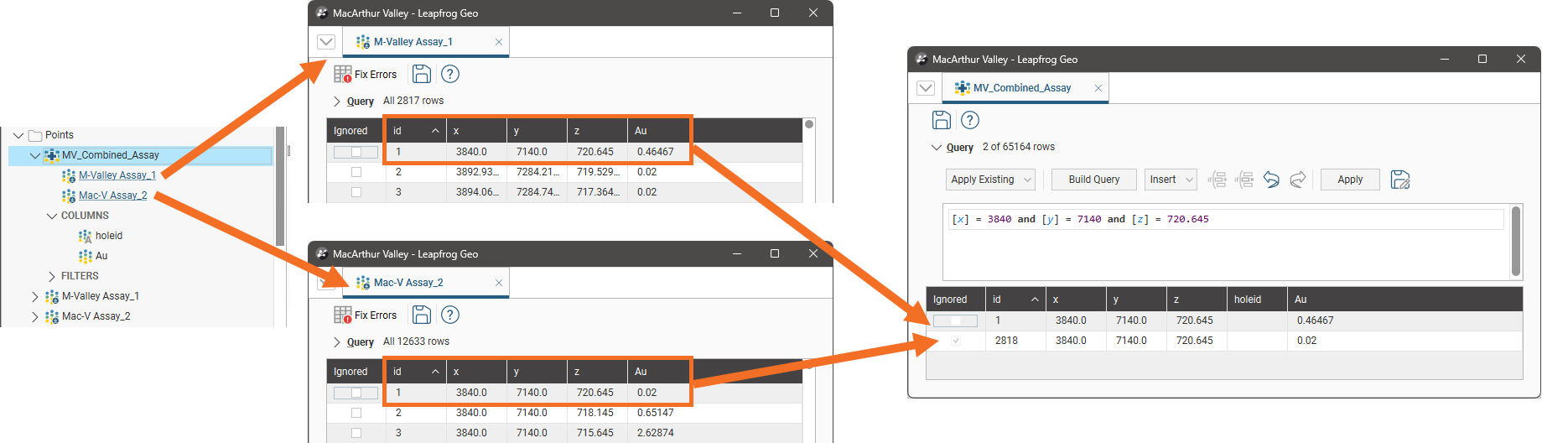
The row with id 2818 is marked as ignored because it is from the assay table that was given a lower priority when combining the two tables. If the table M-Valley_Assay_2 was given the higher priority, the row with id 1 would be ignored.
Creating a Combined Points Table
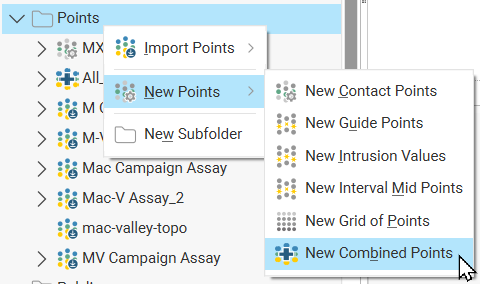
To create a combined points table, right-click on the Points folder and select New Points > New Combined Points:
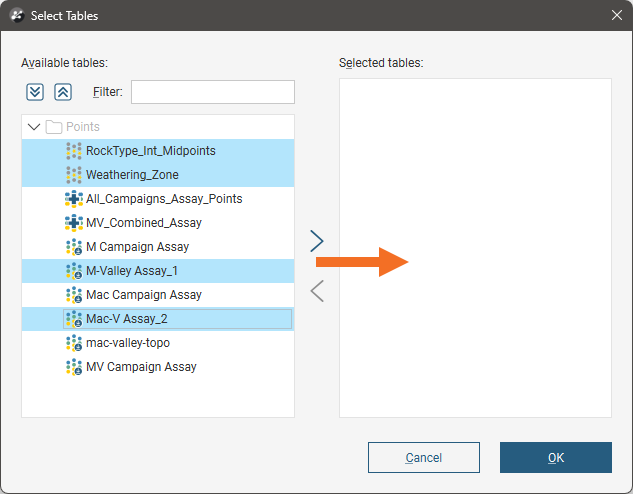
In the window that appears, all tables with suitable data columns are displayed in the Available tables list. Select those you wish to use in the combined points table and move them into the Selected tables list:
Click OK.
In the New Combined Points Table window, the selected tables are displayed, along with the data columns available for use in the combined points table. The Combined Columns list shows the columns that will result:
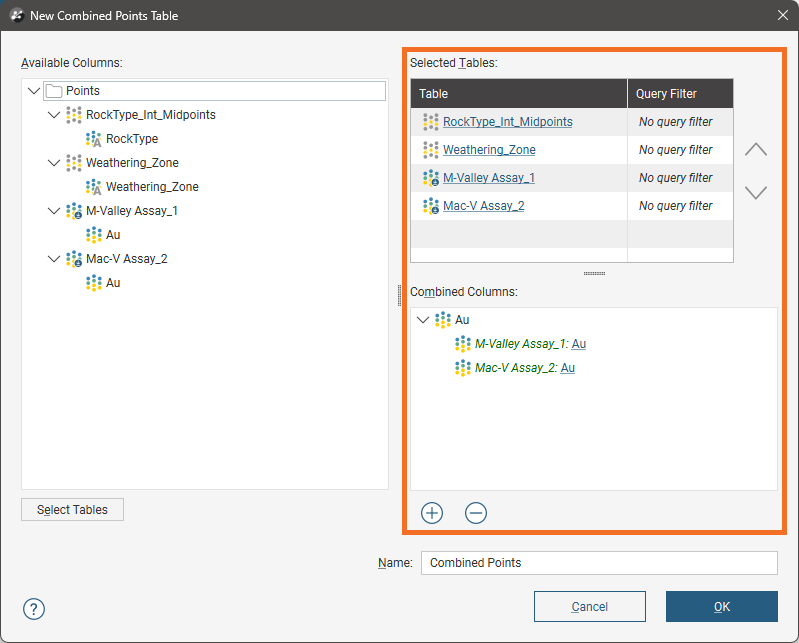
Depending on what columns are in the source tables, some columns from the selected tables list may be automatically added to the Combined Columns list. If you wish to add another column to the Combined Columns list, either:
- Drag it from the Available Columns list into the Combined Columns list or
- Click the Add button (
 ) to move columns into the Combined Columns list.
If you wish to remove a column from the combined table, click on it in the Combined Columns list, then click the Remove button ( ):
):
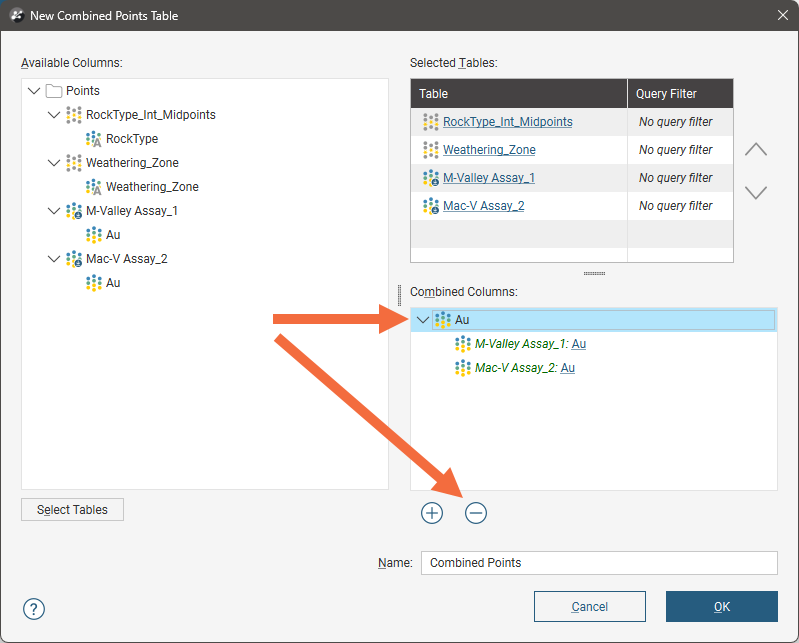
You can also:
- Use the arrows in the Selected Tables list to change the priority of the tables. This is discussed further in Changing Table Priority.
- Add more tables to the Selected Tables list. To do this, click the Select Tables button, then choose from those in the project.
- Add more columns to the combined points table. Drag a column from the Available columns list into the Combined Columns list or click the Add button () to open the Select Columns window.
- Rename a combined column. Double-click on it and enter the new name:
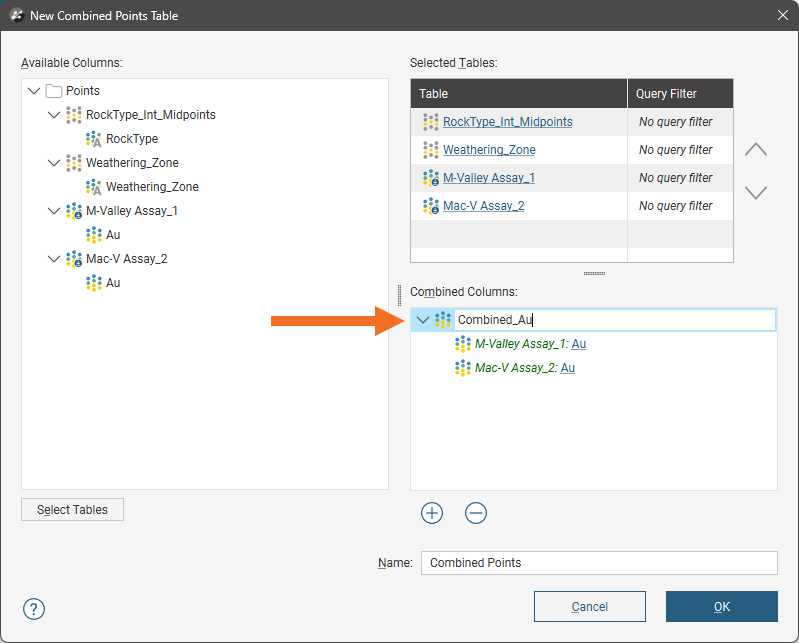
 Adding another table to a combined points table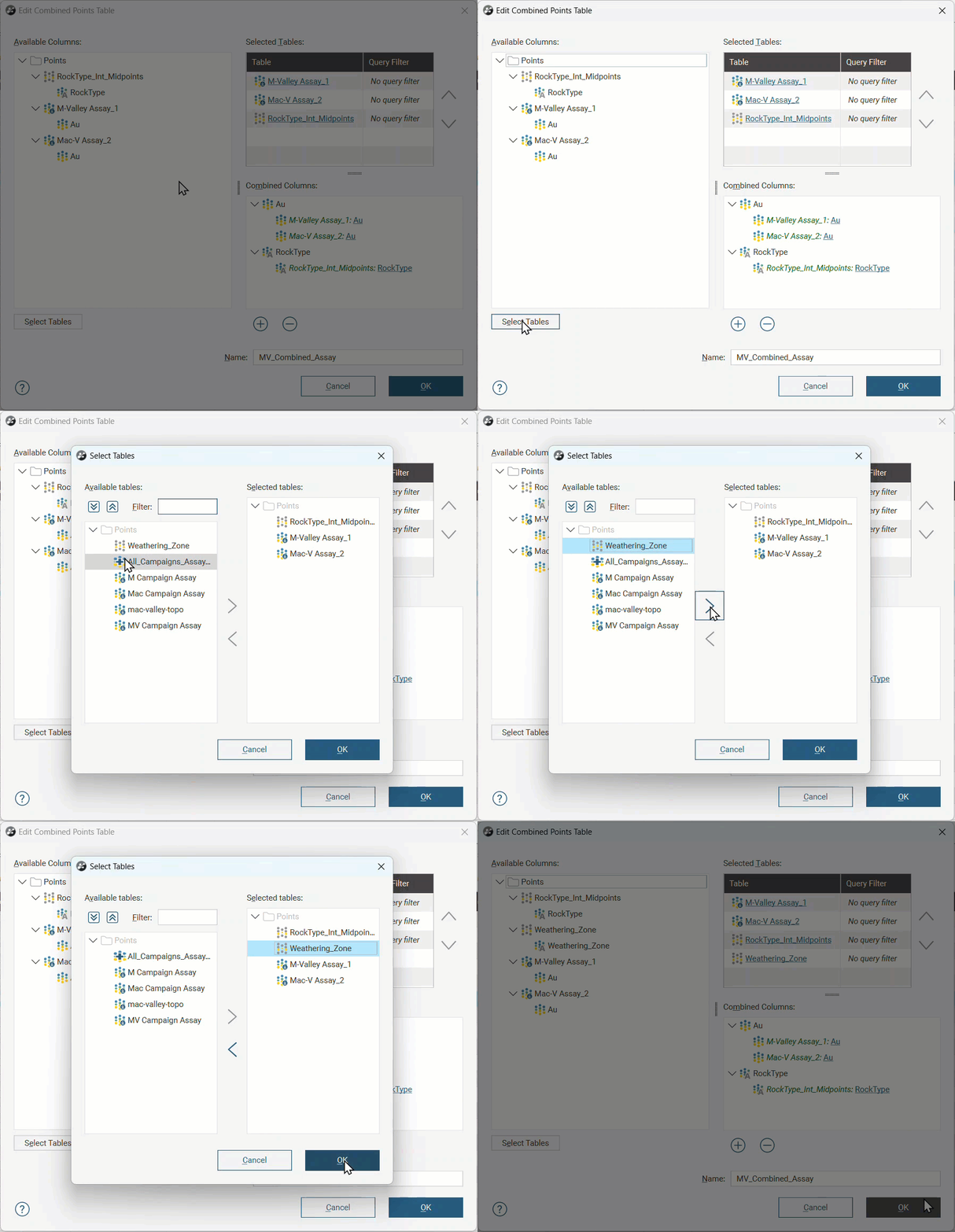
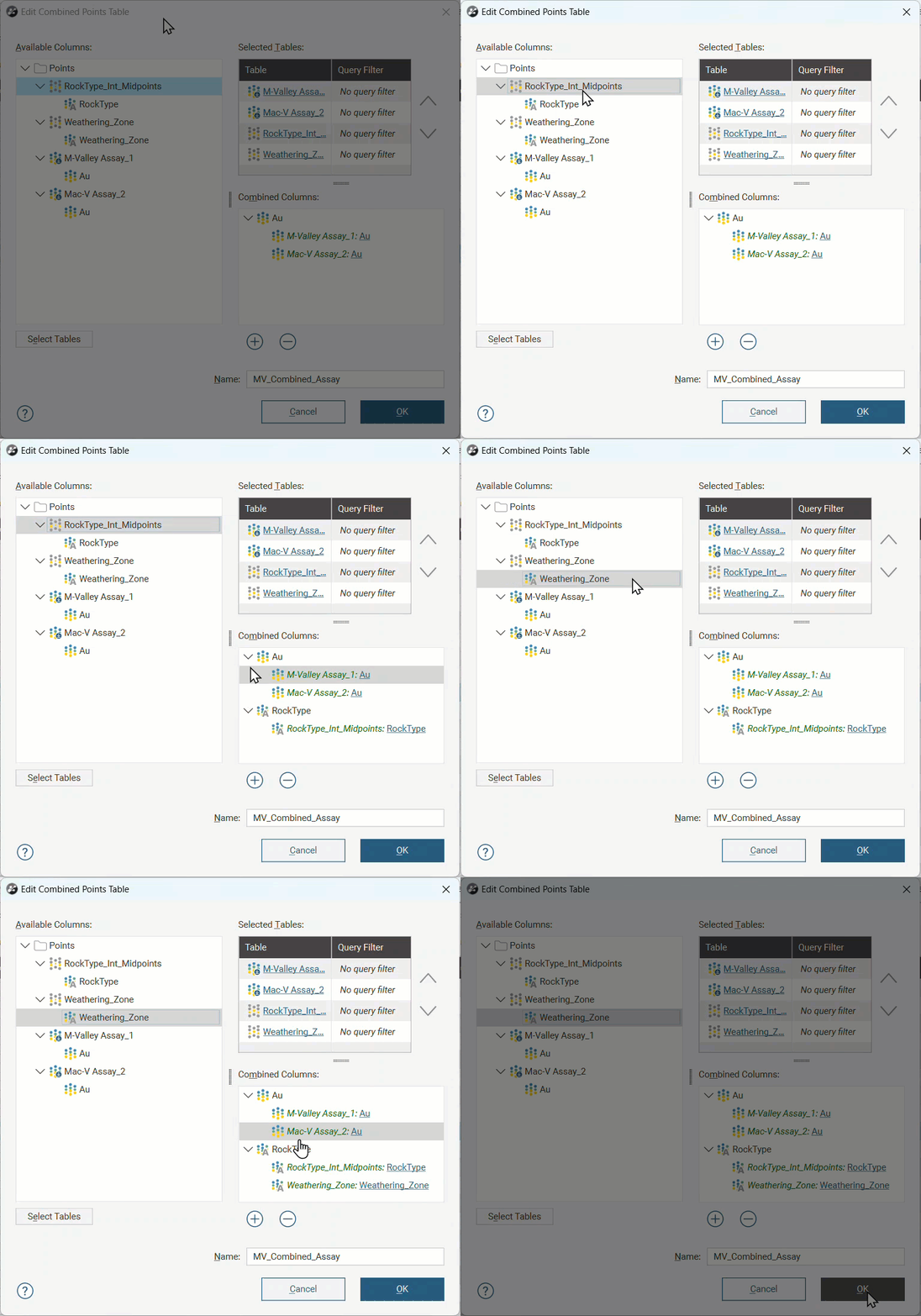
Once you have added the data columns you wish to include, set a Name for the new combined points table, then click OK. The new combined points table will be created and added to the project tree.
Changing Table Priority
The priority of each table in the Combined Points Table window determines what information is used when there is duplicate information. For example, here the M-Valley Assay_1 table is higher in the list and so has higher priority than the Mac-V Assay_2 table:
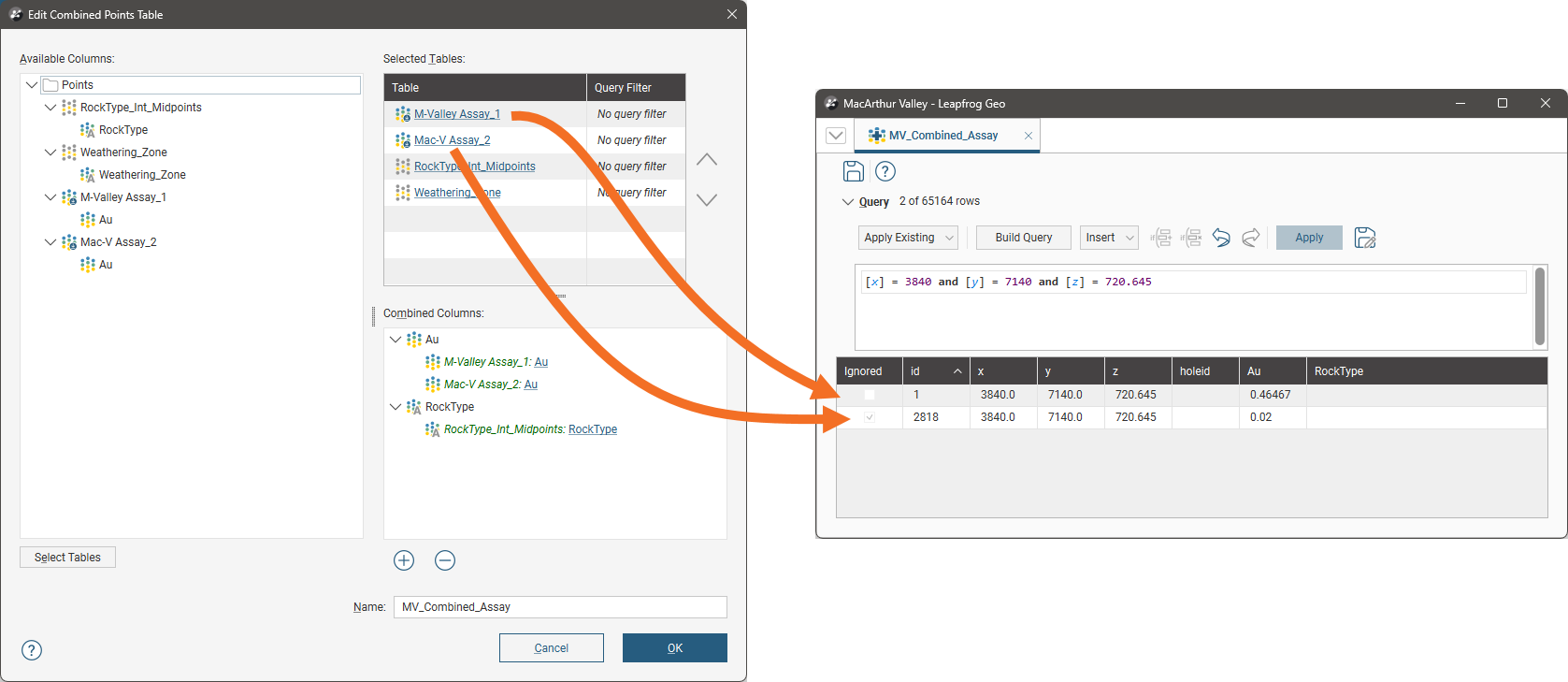
Because the same coordinates are used in each source table, the row from the lower priority table is marked as ignored in the combined points table.
Use the arrows to change the priority of selected tables:
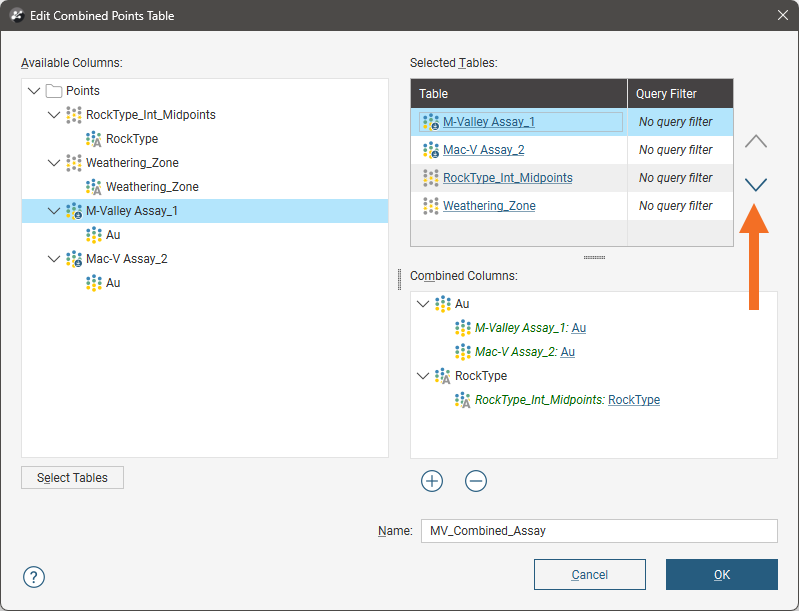
Click OK to close the window and make the changes.
Editing a Combined Points Table
To edit a combined points table, right-click on the table in the project tree and select Edit Combined Points. This opens the Edit Combined Points Table window, which is similar to the New Combined Points Table window. In this window, you can:
- Use the arrows in the Selected Tables list to change the priority of the tables.
- Add more tables to the Selected Tables list. To do this, click the Select Tables button, then choose from those in the project.
- Add more columns to the combined points table. Drag a column from the Available columns list into the Combined Columns list or click the Add button () to open the Select Columns window.
- Rename a combined column. Double-click on it and enter the new name.