
Configuring Sampling in Activities
When the sampling configuration is complete, it can then be used in an activity. There is also some customization that can be which can improve the sampling process. This topic will describe:
A separate topic describes how to use ranked columns to, for example, show the best or final value when there are multiple values for the same analyte. See Using Ranked Columns.
Adding Sample Types
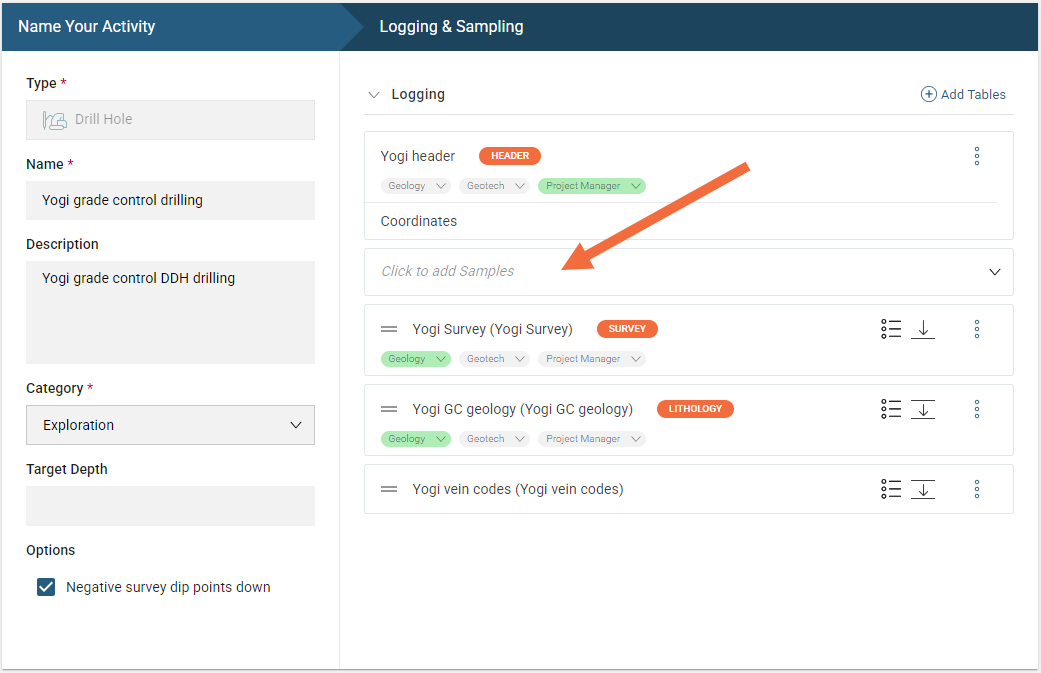
Once you have added a sample table to your activity, options for customizing sampling to your activity will be available.
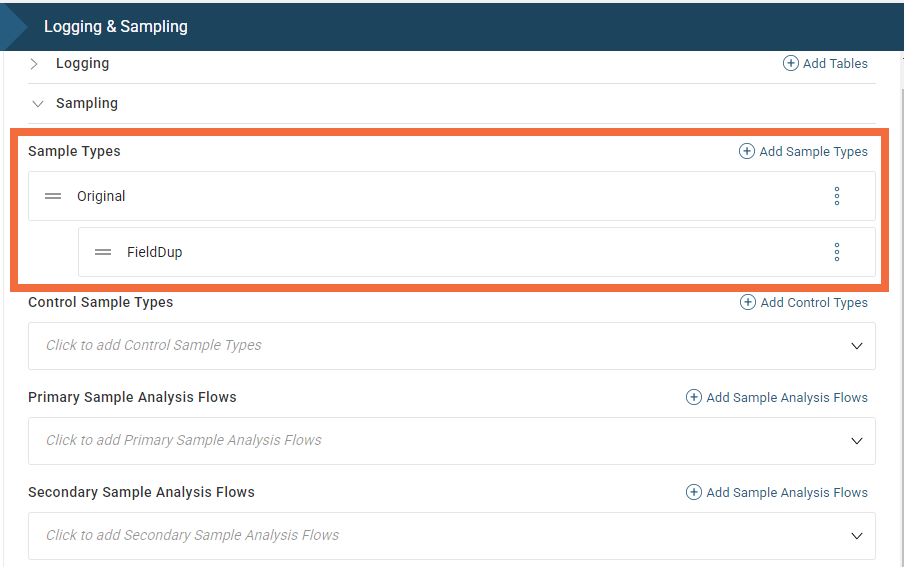
Original and FieldDup sample types are added by default.
Select Add Sample Types or click the overflow menu to show the sample types available. If the sample type you wish to use is not available, you can create a new sample type. See Sample Types in the Sample Lists topic for more information on how to do this.
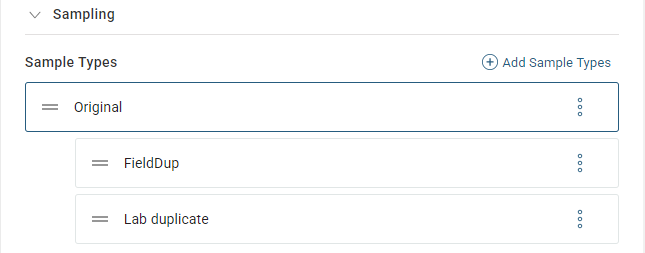
Here we have added a Lab duplicate sample type; this allows the logger to log lab duplicates. The Lab duplicate is nested below the Original sample type. This will mean the logger can only take lab duplicates from an original sample type. The lab duplicate will inherit properties from the original and it also associates a parent sample number.
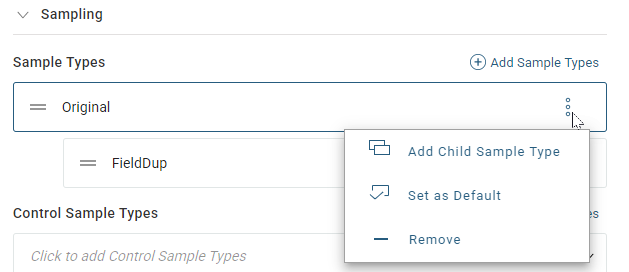
You can nest a sample type by selecting Add Child Sample Type from the overflow menu:
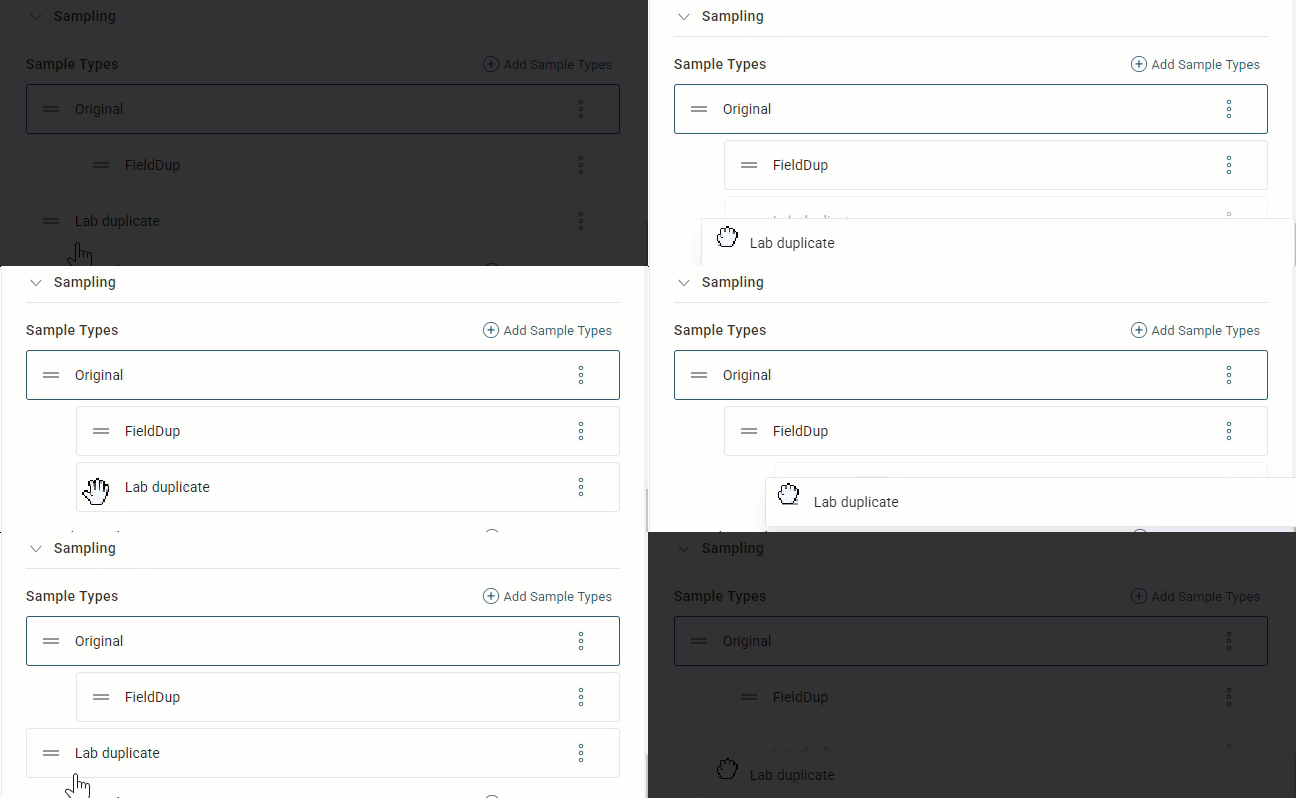
You can also drag and drop the sample type to nest or reorder it:
In the same way, click on the Add control types to add your reference material. In the window that appears, you can add multiple control types at once. You can search by scrolling or typing to dynamically filter as you type. Here we have added a blank and some standards:
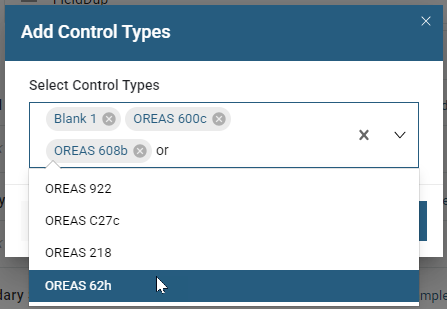
Click Add to add the control sample types to the activity.
Adding Sample Analysis Workflows
It is not required to use a sample analysis workflow. If you choose to add one, click on Add Sample Analysis Flows under Primary Sample Analysis Flows to display the analysis workflows available to choose from.
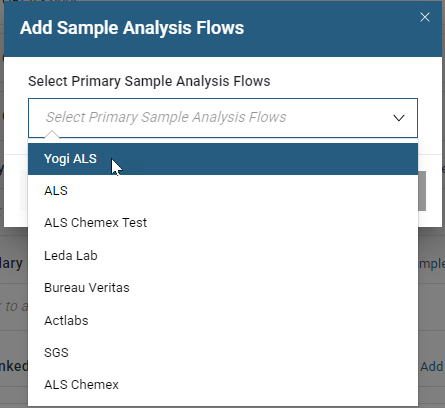
Click Add to add the analysis workflow to the activity.
Each analysis workflow would normally represent a different laboratory. You can have multiple primary workflows and multiple secondary workflows, although it is recommended to use just one or two.